
The changing landscape
For years, the biggest roadblock to decarbonising the UK’s draughty housing stock hasn't been a lack of technology or ambition - it has been due to the bottleneck of centralised bureaucracy.
Grand schemes designed in the corridors of Whitehall rarely translate perfectly to a 1920s solid-wall terrace in Cambridge, an estate in Manchester, or a listed stone cottage in the West of England.
But the landscape of home energy efficiency just experienced a seismic shift.
Warm Homes Plan vs. Great Home Upgrade
Rt Hon Miatta Fahnbulleh, Secretary of State for Energy Security and Net Zero, officially announced that the government is devolving its flagship £15bn Warm Homes Plan. Rebranded as the “Great Home Upgrade” this historic move strips decision-making power away from central civil servants and hands billions of pounds in funding directly to regional mayors and local authorities.
The mandate from the top is clear: home energy transformation will now operate “postcode-by-postcode, street-by-street, community-by-community.”
The road to Net Zero...
At PRL, we have always looked at buildings as whole systems, not isolated components. From where we stand, this shift toward devolution isn’t just welcome administrative news - it is exactly the structural breakthrough the UK retrofit sector needs to finally deliver on its Net Zero potential.
The death knell of the 'Whitehall Blanket Approach'
Historically, funding pots were distributed via complex, hyper-centralised bidding competitions. Local councils had to waste time and resources competing against one another for short-term financial crumbs, leading to stop-start schemes that routinely ran out of money just as the local supply chains were getting up to speed.
Worse, centralised schemes rarely account for regional architectural diversity. The UK has the oldest and most diverse housing stock in Europe. A single, rigid policy guideline issued from London cannot simultaneously solve the damp issues of a solid-walled stone cottage in Gloucestershire and the structural heat loss of a post-war concrete high-rise in Birmingham.
By putting regional mayors and strategic local authorities in the driving seat, the Great Home Upgrade respects local realities. Local leaders actually know their local housing typologies. They know which neighbourhoods suffer most from fuel poverty, which local building materials work best, and which conservation areas require specialised design considerations.
Unlocking the economics of a whole-house system
As specialists in sustainable building, we advocate for an uncompromising fabric-first methodology. This means that we treat the building envelope first - insulating walls, roofs, and floors, fixing structural defects, and managing airtightness -before specifying advanced renewable heating tech like heat pumps.
When done on an isolated, house-by-house basis, deep retrofitting requires highly specific, bespoke engineering. However, when you empower local authorities to deploy a street-by-street strategy, the economics of high-performance building completely change.
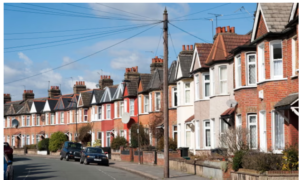
Imagine an entire terrace of identical period properties being upgraded simultaneously. Under a devolved Warm Homes Plan, local authorities can coordinate area-based rollouts. This unlocks massive economies of scale:
- Scaffolding can be erected across entire blocks at once.
- High-performance insulation materials, triple-glazed windows, and vapour control layers can be procured in bulk.
- Specialised installation teams can move efficiently from property to property, without logistical downtime.
This systemic efficiency mirrors our approach on the award-winning Millhouse project. Our colleagues - D&J Project Management Ltd. - won the 2025 FMB Sustainable Building Award (Central Region) for this Warm Core, Deep Retrofit Project.
Devolution means these deep, high-level structural upgrades can transition from isolated pioneering triumphs into standard, neighbourhood-wide reality.
Rebuilding the local supply chain
One of the most profound elements of Secretary Fahnbulleh’s announcement was her emphasis on using the £15bn fund to train young people for skilled jobs and boost local supply chains.
The UK currently faces a critical green skills shortage. We do not have enough qualified ventilation technicians, heat pump engineers, or specialist insulation installers to meet our national carbon targets. Up until now, small building firms have been hesitant to invest thousands of pounds in training their staff for eco-renovations because centralised government grants were too volatile - appearing one year and being scrapped or rebranded the next.
Devolving billions to regional mayors creates long-term market certainty. When a regional combined authority controls a secure, multi-year budget, local builders can confidently invest in the tools, certifications, and apprentice academies required to scale up.
Connecting regional investment directly to local trade networks ensures that public money doesn't just cut carbon emissions; it creates a robust ecosystem of highly skilled, local heritage-preservation and energy-efficiency experts.
Navigating the transition: keeping the momentum going
While the devolution of the Warm Homes Plan is a magnificent conceptual victory, the transition phase requires careful navigation.
Warm Homes Plan Devolution: What It Means for Solar
Leading energy think tanks have already issued clear warnings to ministers: the government must ensure a smooth handover of these billions to prevent a temporary funding hiatus. If existing funding streams abruptly freeze while Whitehall draws up the administrative mechanics for local mayors, it could inadvertently stall active projects and harm the very retrofit sector it intends to boost.
Also, as organisations like NESTA have pointed out, while area-based insulation and social housing estate upgrades belong in local hands, certain national individual initiatives - like the Boiler Upgrade Scheme (BUS) - must maintain a simple, unified national framework, so that individual owner-occupiers can still seamlessly access direct grants for heat pumps.
The Great Home Upgrade proves that the drive toward an absolute Net Zero standard is no longer a distant political concept - it is actively being woven into the fabric of our local communities.
Carl Dodd, Property Revolutions Ltd.
Photo copyright @ Alex Segre/Alamy

