

A new dawn for social housing
The UK government has taken a significant step towards a greener, warmer, and more affordable future for social housing residents. As recently announced, a £100 million increase to the Warm Homes: Social Housing Fund (formerly the Social Housing Decarbonisation Fund) has been confirmed, aimed at accelerating energy efficiency upgrades and tackling the rising cost of energy.
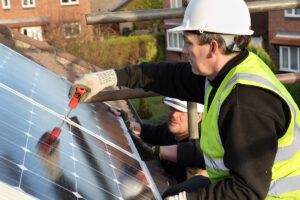
This cash injection is designed to deliver immediate benefits, with a focus on solar panel installations for up to 57,000 households within this financial year. As energy secretary Ed Miliband emphasised, this initiative is about protecting families from soaring energy prices and speeding up the drive to clean, renewable energy.
Related Link: Britain embraces solar revolution following war in Iran
In this Blog, we explore what this funding increase means for social landlords, the benefits for residents, and the broader context of the UK’s Net Zero transition.
The £100m top-up
The Department for Energy Security and Net Zero (DESNZ) announced the extra funding on 22 April 2026, reinforcing the government's dedication to meeting the Net Zero 2030 targets. The £100m comes on top of already confirmed funding of £1.29bn allocated between 2025 and 2028, aimed at upgrading around 100,000 homes.
Key objectives of the funding:
- Rapid Deployment: The primary focus is a rapid rollout of solar panel installations.
- Targeted Support: Focusing on EPC Band D or lower, aiming to bring homes to a minimum of Band C.
- Tackling Fuel Poverty: Directly reducing energy bills for the most vulnerable tenants.
- Infrastructure Investment: Supporting housing providers to strengthen their supply chains and scale up retrofit programmes.
The Chartered Institute of Housing (CIH) welcomed the move, noting its role in accelerating the Warm Homes Plan.
Beyond solar: comprehensive retrofitting
The Warm Homes: Social Housing Fund also supports broader retrofit initiatives, including:
- Insulation: Upgrading cavity wall, loft, and solid wall insulation to keep heat in.
- Heating Systems: Replacing outdated gas boilers with low-carbon alternatives, such as heat pumps.
- Ventilation: Ensuring that better-insulated homes have adequate air quality, to prevent damp and mould.
The impact on social housing providers
For housing associations and local authorities, this additional funding provides much-needed confidence to plan ahead and invest. With regulatory pressures mounting regarding damp, mould, and energy performance, the funding serves as a vital component of asset management strategies.
Key takeaways for landlords:
- Match Funding Required: While the grants are substantial, they often require matching investment from housing associations.
- Long-Term Certainty: The funding helps build capacity and capability within the supply chain, encouraging long-term partnership models.
- Regulatory Alignment: This investment aligns with the new Decent Homes Standard, which increasingly ties housing quality to environmental performance.
- Devolution of Funding: In areas like Greater Manchester and the West Midlands, funding is being devolved to local authorities, allowing for tailored, area-specific, and locally-led retrofit plans.
The benefits for residents
The ultimate aim of the initiative is to improve the lives of the people living in social housing. By enhancing the energy performance of these homes, residents can expect several key benefits, including:
- Reduced energy bills - with the cost-of-living crisis still affecting millions, reducing household energy bills is critical. Solar panels and better insulation allow residents to use less energy and pay less for the energy they do use.
- Increased comfort and health - a well-insulated home is warmer in the winter and cooler in the summer. Furthermore, improved insulation and ventilation significantly reduce the risk of damp and mould, which are linked to respiratory problems.
- Contributing to Net Zero - residents can take pride in knowing their homes are part of the solution to climate change, contributing directly to the UK’s carbon reduction goals.
Key 2026 trends in social housing retrofit:
- Rise of the "For-Profit" Landlord: The investment landscape is evolving, with new models of partnership bringing additional capital into the sector.
- Focus on Delivery: Following the funding announcements, the sector is now under intense pressure to deliver, with significant work to be completed by September 2028.
- Support Services: The Retrofit Information, Support and Expertise (RISE) service continues to provide free support, helping social housing providers plan and deliver successful, large-scale retrofit projects.
The government’s decision to increase the Warm Homes: Social Housing Fund is a positive and proactive move. By focusing on rapid, impactful improvements like solar installations, this funding addresses both the immediate financial pressures on households, and the long-term imperative of decarbonisation.
For the social housing sector, this represents a unique opportunity to upgrade aging stock, enhance the health and safety of tenants, and play a leading role in the UK’s green industrial revolution. As we move closer to 2030, such investments are not just beneficial - they are essential.
Carl Dodd, Property Revolutions Ltd.

